Best Cryptocurrencies to Invest in 2026: A Practical Investor’s Guide
Introduction
Cryptocurrency markets continue to evolve in 2026. While volatility remains a defining characteristic, digital assets are increasingly integrated into global finance, payments, decentralised applications, and institutional portfolios.
Investors often ask a simple question: which cryptocurrencies are worth considering today?
This guide examines major cryptocurrencies based on market relevance, technological utility, adoption trends, and risk profile. It does not provide financial advice or guarantee returns. Instead, it aims to offer a structured overview to help readers make informed decisions.
If you are new to digital assets, you may first wish to read our guide on How to Buy Bitcoin in Mexico
How We Evaluate Cryptocurrencies
Selecting cryptocurrencies should involve more than following social media trends. A structured evaluation typically considers:
Market capitalisation and liquidity
Technological foundation
Real world use cases
Developer activity
Regulatory exposure
Network security
Market data can be verified through reputable sources such as CoinMarketCap
Major Cryptocurrencies to Consider in 2026
Below is a comparative overview of leading digital assets. These represent established projects with significant adoption and infrastructure support.
Cryptocurrency | Primary Use Case | Strengths | Key Risks |
Bitcoin (BTC) | Store of value | Largest network, strong security | High volatility |
Ethereum (ETH) | Smart contracts | DeFi & NFT ecosystem | Scaling challenges |
Solana (SOL) | High-speed blockchain | Fast transactions | Network reliability history |
Binance Coin (BNB) | Exchange utility token | Large ecosystem | Regulatory scrutiny |
Ripple (XRP) | Cross-border payments | Institutional focus | Ongoing regulatory debates |
Bitcoin (BTC)
Bitcoin remains the largest and most established cryptocurrency. It functions primarily as a decentralised store of value and payment network.
Its strength lies in its security and limited supply model. Many investors treat Bitcoin as digital gold.
However, price volatility remains significant. Long term holding strategies are common, but short term speculation increases risk.
If you are considering purchasing Bitcoin, review our article on Best Crypto Exchanges in Mexico
Ethereum (ETH)
Ethereum supports smart contracts and decentralised applications. It underpins decentralised finance platforms, NFTs, and numerous blockchain projects.
Its ecosystem is one of the largest in crypto.
Ethereum faces scalability challenges, although upgrades continue to improve performance.
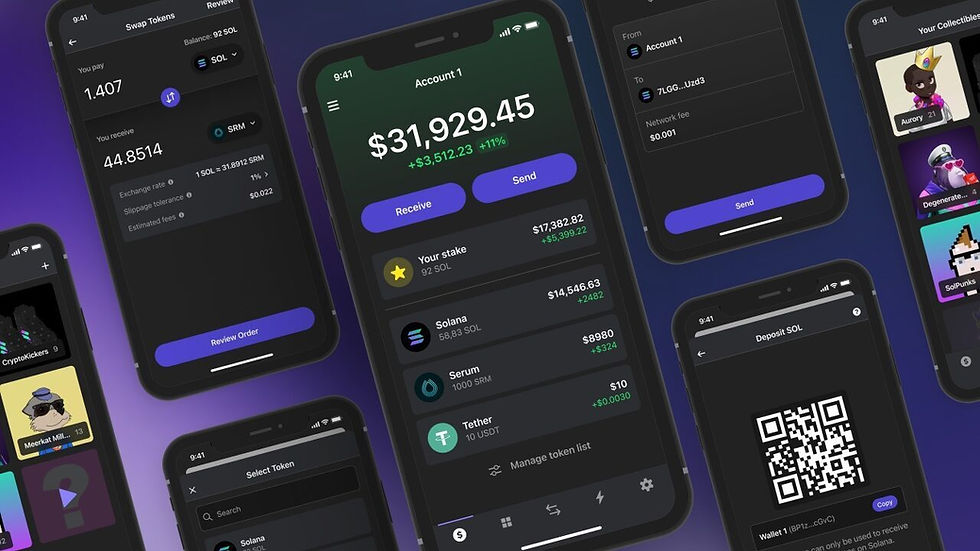
Solana (SOL)
Solana focuses on high-speed transactions and lower fees. It competes directly with Ethereum for decentralised application development.
Its technical design enables strong performance, but past network interruptions highlight infrastructure risk.
Investors should assess reliability history before allocating capital.
Binance Coin (BNB)
BNB is linked to one of the world’s largest cryptocurrency exchanges. It is used for transaction fee discounts, ecosystem participation, and smart contract functionality.
Its growth depends heavily on the Binance ecosystem and regulatory developments.
Given global scrutiny of exchanges, regulatory risk must be considered carefully.
Ripple (XRP)
Ripple aims to facilitate cross-border financial transfers. Its network is designed for institutional adoption and payment systems.
Regulatory disputes have influenced its price and availability in certain jurisdictions.
Investors should monitor legal developments before investing.
Market Comparison Snapshot
To understand relative positioning, consider this simplified overview:
Factor | Bitcoin | Ethereum | Solana | BNB | XRP |
Market Maturity | Very High | High | Medium | High | High |
Volatility | High | High | Very High | High | High |
Institutional Interest | Strong | Growing | Emerging | Moderate | Focused |
Regulatory Sensitivity | Moderate | Moderate | Moderate | High | High |
Risks of Investing in Cryptocurrency
Cryptocurrency markets remain highly volatile. Prices can fluctuate dramatically within short periods.
Common risks include:
Regulatory changes
Exchange failures
Security breaches
Market manipulation
Liquidity constraints
Strong security practices reduce exposure to operational risk.
Long Term vs Short Term Strategy
Short term trading involves timing market movements, which increases exposure to volatility and emotional decision making.
Long term investing typically focuses on:
Technological development
Adoption growth
Macro-economic trends
Network security
Each strategy requires different risk tolerance.
Regulation and Investment in Mexico
Mexican investors must consider regulatory and tax obligations. Cryptocurrency is legal but not legal tender.
Tax compliance is required when profits are realised.
Official financial guidance is available from Banco de México https://www.banxico.org.mx
You may also review our detailed guide on Crypto Taxes in Mexico
Understanding regulation is essential before committing significant capital.
Diversification Considerations
Many investors diversify across multiple assets rather than concentrating on a single cryptocurrency.
Diversification may reduce exposure to individual project risk, though it does not eliminate market volatility.
Allocations should reflect personal financial goals and risk tolerance.
Final Thoughts
In 2026, cryptocurrency markets continue to mature but remain volatile. Bitcoin and Ethereum maintain dominant positions, while alternative networks compete through innovation and specialisation.
Responsible investing requires research, diversification, and strong security practices. Regulatory awareness is equally important, particularly in Mexico.
Before investing, ensure you understand how to purchase, store, and declare cryptocurrency correctly.


Comments